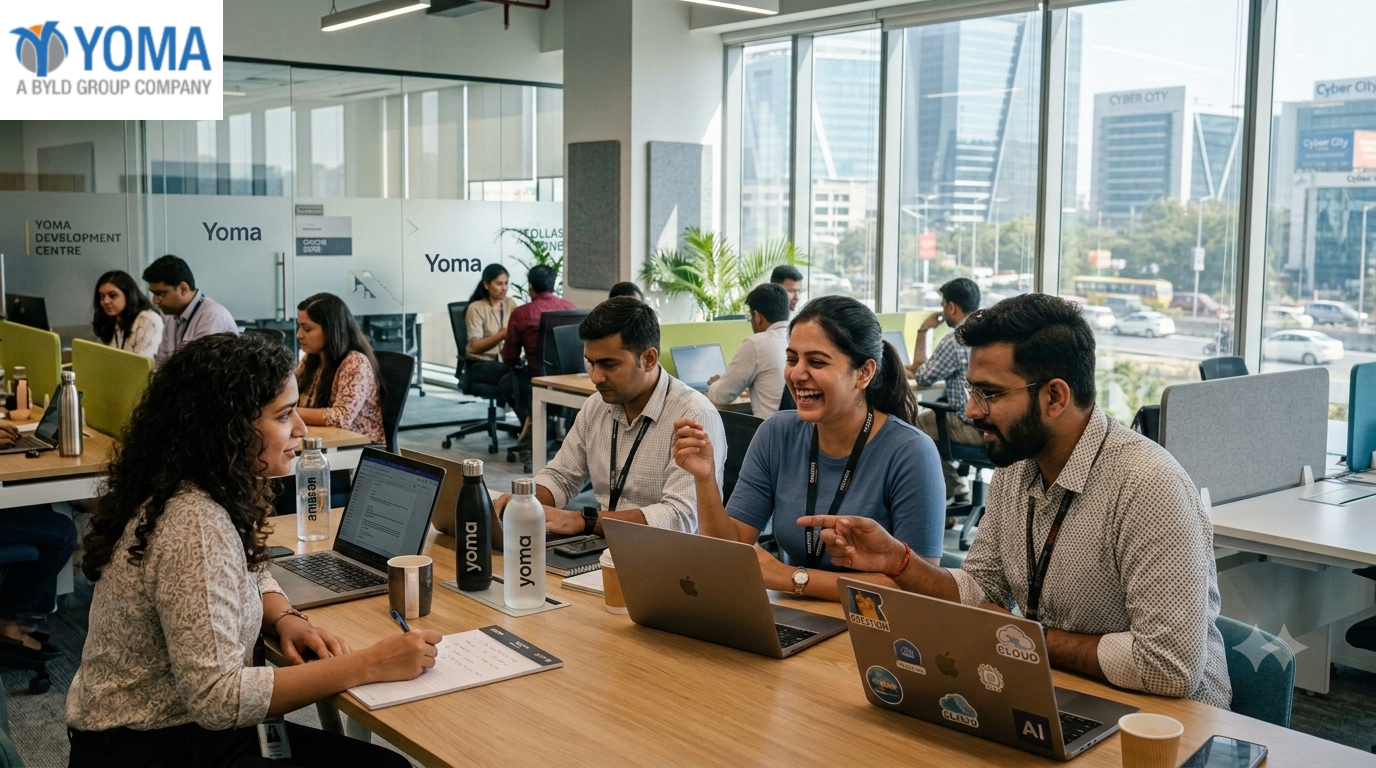

The function of IT personnel has transformed from a mere back-office position to a critical component of contemporary businesses in a world where technology is evolving at a rapid pace. The intentional process of identifying, recruiting, and deploying skilled technical professionals from specialists to software engineers into roles that are in alignment with the organization’s requirements is known as IT staffing.
The global movement toward digital transformation has resulted in an increase in the importance of IT personnel. The “talent gap” has become a substantial concern for businesses as they transition to the cloud and implement AI. Due to the shortage of a comprehensive employment strategy, even the most ambitious digital roadmaps may be stalled due to a lack of sufficiently skilled personnel.
The Method and Its Functions
The excursion encompasses more than just examining resumes. The following are components of an effective IT recruiting strategy:
Ability discovery and evaluation:
Utilising extensive networks to identify “passive” talent.
Scalability is the ability to rapidly recruit additional personnel to complete both short- and long-term initiatives.
Specialised Use Cases
For example, the recruitment of individuals for specialised positions in Blockchain, Data Science, or DevOps that would be difficult for traditional HR departments to evaluate.
Businesses can utilise a global talent pool, reduce costs, and increase flexibility by utilising professional IT outsourcing services. The methods for expediting the recruiting process and preventing the occurrence of common errors will be more thoroughly examined in this article.
The Strategic Advantage: The Significance of IT Employment
The connection between a great concept and a product that is ready to be sold for a growing business is technical skill. This is the point at which the recruitment of IT personnel becomes a critical growth strategy. Businesses frequently encounter a harsh reality as they expand: the local talent pool is limited, and it can take months to locate qualified workers. This gap is addressed by professional IT staffing, which provides immediate access to specialists who have already undergone a thorough background check and are prepared to commence work.
The significance of IT staffing is most evident when there are persistent talent gaps. A dedicated IT staffing agency will assist you in circumventing the throngs on conventional job sites, regardless of whether you require a cloud architect or a full-stack coder. Due to this, the recruiting process is both expeditious and customizable. This enables executives to concentrate on achieving objectives while the IT staffing process manages the time-consuming technical screening.
IT employment is crucial not only for the purpose of filling positions, but also for the potential to generate novel concepts. By employing individuals on a project basis to introduce new ideas and specialised skills, businesses can experiment with new technology without the long-term risk of permanent overhead. Being able to adapt is at the heart of strategic workforce planning for IT staff. It lets companies change the number of employees they have based on how the market is doing at the moment. This makes sure that their budgets are always met when it comes to their human capital.
We are going to discuss the potential of a customised IT personnel plan to transform your IT department from a cost centre to a critical source of competitive advantage.
A Guide to IT Staffing Models: Selecting The Most Appropriate Option
It is not frequently the case that there is a solitary optimal method for recruiting and hiring exceptional individuals. It is crucial to be aware of the various methods of hiring IT professionals in order to maintain a balance between your budget, project timelines, and long-term objectives as businesses evolve. Each IT staffing model offers its own advantages, contingent upon whether you prefer to preserve the same culture or expedite technical tasks.
Full-time IT personnel
This is the typical process when a business employs an individual for a full-time, long-term position. The primary advantage of employing permanent IT personnel is that they possess long-term institutional knowledge and are profoundly ingrained in the organisation’s culture. Despite the fact that it is more expensive and requires a lengthier hiring process, it remains the most effective method for critical teams to develop their own technology.
IT Staffing on a Contract Basis
A contract-based IT employment model is a flexible way for businesses to get the help they need to meet seasonal or special project goals. Using this method, businesses can hire experts for a set amount of time, usually between three months and a year. A lot of companies use this method to hire IT professionals who need access to advanced technical skills but want to cut their salary costs.
Contract-to-hire staffing
Think of this as a way to “try before you buy.” Before making a formal offer, the company can see how well the candidate fits in with the culture of the company and how well they know how to use technology. There are a lot of ways to hire IT staff, and contract-to-hire is one of them. Consequently, the likelihood of “bad hires” in critical technical positions is significantly reduced.
IT personnel from both domestic and international sources
The IT workforce has expanded to encompass individuals who labour from home and abroad in this post-geographic era. This concept enables businesses to identify talent from around the globe at a reduced cost. This approach is most effective for large-scale construction projects that necessitate continuous technical assistance or the involvement of numerous engineers.
Models that are founded on the addition of staff and projects
A comprehensive deliverable is provided to an external team as part of project-based personnel. Conversely, staff augmentation is a method of recruiting IT professionals by incorporating them into your current workforce. These methods of recruiting IT professionals are ideal for addressing temporary skill deficiencies, such as the requirement for a DevOps engineer, without disrupting the existing team structure.
A Step-by-Step Guide to Hiring the Appropriate IT Staff
Putting together a good IT team is hard work that requires more than just matching keywords on a resume. A carefully thought-out IT staffing strategy is necessary for long-term success. This company makes sure that every new hire adds measurable value by following a standard roadmap. This is true whether the person is hired directly or through an IT staffing agency.
1. Organising the workgroup and evaluating their requirements
During the first part of the journey, the technical environment will be carefully searched over. People who have a stake in the job must clearly state the problem that the new employee is supposed to solve. One component of this IT employment process is the determination of the technology stack (such as Python, AWS, or React), the required level of seniority, and whether the position is permanent or temporary in order to facilitate the achievement of a specific project objective.
2. Locating exceptional individuals and conducting database screenings
The inquiry commences immediately upon the identification of the requirements. It is not uncommon for a proficient IT hiring service to employ extensive, private databases and “passive” candidate networks that are not visible on public job platforms. In this phase of the IT staffing process, the objective is to sort through a substantial pool of applicants in order to identify individuals whose career trajectories align with the organisation’s requirements.
3. Assessment of abilities and verification of their practicality
When it comes to technology, a resume only tells you half of the story. For IT staffing that has strict requirements, there needs to be a separate validation process. This could include architectural reviews, whiteboard meetings, or live code testing to make sure the candidate has the real-world skills that match the experience they say they have. The prevention of costly “mismatches” later in the process is facilitated by the early validation of these skills.
4. Setting up and selecting interviews
Maintaining an interview cycle can be exceedingly challenging. By organising the process between candidates and recruiting managers, effective IT staffing facilitates this. This ensures that the process is conducted efficiently for all parties involved. The objective is to determine whether the individual is compatible with the organisation’s culture and possesses critical soft skills, such as interaction and problem-solving.
5. Initiation and deployment
The work is not complete until the agreement is executed. The onboarding phase for IT personnel ensures that the new employee is integrated into the organisation. This entails providing them with access to secure areas, enabling them to set up devices, and enabling them to immediately utilise the team’s flexible work processes.
6. Consistently monitoring and promoting participation
The process of modern IT employment does not conclude on the first day. By monitoring performance and soliciting feedback, it is possible to retain the most qualified employees and ensure that the organisation achieves the desired return on investment (ROI). The distinction between successful employment and a quick fix is the management of relationships over time.
Key Positions Fulfilled by IT Staffing
The contemporary technological landscape is vast, and no single region can possess a comprehensive understanding of it. By hiring the right IT staff, businesses can connect with skilled experts who have the exact technological DNA that leads to new ideas. Companies can use strategic IT staffing to fill positions that are in high demand but difficult to find through traditional HR channels.
Individuals who are employed as technologists and develop software
The individuals who develop software and operate computers as engineers are essential to the expansion of the digital economy. To guarantee that you possess the required hands-on skills to construct high-quality, scalable codebases, you may employ IT staffing. We are capable of providing assistance with regard to your project’s requirements for mobile workers for iOS and Android, back-end experts in Java, or front-end experts in React.
Individuals who are employed in the fields of technology, DevOps, and the cloud
The demand for individuals with expertise in DevOps and Cloud is on the rise as organisations eliminate obsolete systems. Architects who are proficient in AWS or Azure environments and engineers who can automate deployment processes are among the benefits of employing IT personnel. This guarantees that your system functions efficiently and is reasonably priced.
How to work with data, AI, and analytics
Data is the new resource; however, it necessitates further development. By employing proficient IT personnel, an organisation may recruit data scientists and AI engineers who can convert unstructured data into valuable insights. It is imperative that these professionals construct the machine learning models that provide businesses with a competitive advantage in the current market.
Attorneys and specialists in cybersecurity and compliance
Cybersecurity is crucial in an era in which data breaches are occurring more frequently. Security specialists and compliance officers can be hired by businesses through IT staffing to ensure the security of private data and to ensure safety with worldwide regulations such as GDPR and HIPAA.
What are the functions of QA, testing, and IT assistance?
Finally, the preservation of excellence necessitates an extensive level of quality control. The individuals employed in IT support ensure that all operations are conducted efficiently on a daily basis. Additionally, there are individuals who are responsible for critical QA and testing tasks in order to identify issues prior to their impact on consumers.
Advantages of IT staffing
There is a lot of competition between businesses these days, and their success often depends on how well they can use technology. On the other hand, building a great team from scratch takes a lot of time and money. In the current business world, this is why it is so important to find IT professionals. Companies can maintain an efficient operation by remaining ahead of the technological curve.
Acquisition of qualified personnel at a faster pace
One of the most advantageous aspects of employing IT personnel is the ease with which they facilitate the acquisition of new knowledge. A specific set of skills, such as high-level AI models or a specific form of blockchain technology, can require months to hire. This phase is omitted when a professional IT company is hired, as they utilise pre-existing networks of individuals who have already been vetted. Consequently, the hiring process is reduced from months to a mere few days.
Reducing the risk of recruiting and saving money
Many leaders fail to consider the true cost of a subpar employee, which includes the time and money spent on training, the time lost from work, and the cost of terminating the individual. Businesses can mitigate their financial exposure through the utilisation of IT staffing. The majority of the time, IT staffing agencies are responsible for the administration of payroll, benefits, and compliance for contract positions. This enables companies to convert fixed labour costs into variable costs. Businesses seeking to enhance their profitability through the recruitment of IT personnel must prioritise this financial flexibility.
The workforce's capacity for growth and adaptability
Business requirements are not static for an extended period. Twenty developers may be required to initiate a product that will be utilised for six months, but only five developers may be required to maintain it. IT workers generate the “accordion effect,” which enables executives to adjust the workforce size in accordance with demand. This allows you to ensure that you never have an insufficient number of employees during critical sprints or an excessive number during sluggish periods.
Enhanced productivity and project timeliness
When the appropriate individuals are in the appropriate positions, productivity increases significantly. By employing specialised IT personnel, your core team will not be required to perform a significant amount of work that is not within their area of expertise. Project issues are resolved, and delivery timelines are reduced by incorporating “plug-and-play” talent into specific workstreams. Ultimately, the recruitment of IT personnel enables your business to expand at the pace of innovation, ensuring that technical debt is managed and product roadmaps are precisely met.
Advantages of IT Staffing for IT Professionals
Businesses derive substantial advantages from this methodology; however, there are equally compelling advantages for individuals. Modern IT professionals are afforded the opportunity to advance in their careers through IT staffing, which is not always feasible in traditional, fixed positions. The IT staffing agency is not restricted to a singular product or internal legacy system. Rather, they are promptly exposed to a variety of organisational styles and technology stacks.
It gives people a lot of job opportunities and helps them learn new skills faster because of the regular rotation. By moving from one project to another, a developer can learn a lot about AI-driven data in one area and moving to the cloud in another. This variety makes sure that their products and services are always useful and relevant. IT staffing also helps people find jobs in many different industries, such as banking, healthcare, and e-commerce, so they can find the job that fits their interests.
Along with career advancement, lifestyle benefits are also very important. These types of flexible and hybrid work options are now highly valued by most IT outsourcing companies because they let professionals set their own hours and work from anywhere. That results are valued more than “desk time” shows how the IT job market works today. This makes it a great choice for people who want to find a better balance between their personal and professional lives without giving up the complexity of their technical issues. Most of the time, IT staffing firms tell their employees to think of their jobs as journeys with no set endpoint.
Selecting Between IT Staffing and Hiring Individuals in-House
This is the state of IT in 2026: the argument between IT staffing and standard in-house hiring is no longer about which is “better,” but rather about which will assist in the attainment of your immediate business objectives. IT personnel provide the flexibility necessary to compete in the fast-paced digital market of today, while in-house teams assist in maintaining the company’s culture over time.
Time and Cost of Hiring
The traditional method of hiring individuals remains a substantial investment. Even in 2026, it still takes a long time to fill an internal IT position—often more than 45 days—because there are so many applicants and interviews. On the other hand, IT job services use talent pools that have already been screened to cut down on the time needed to hire people. In some cases, professionals are posted within 5 to 10 days. Even if the hourly rate for personnel is higher, you are not required to pay for background checks, advertising, or the “bench cost” of having a full-time worker during project downtime.
Talent Availability
It is challenging for internal HR teams to identify individuals with specialised skills, such as infrastructure for quantum computation or AI ethics. IT staffing services concentrate on these positions due to their difficulty in filling. They maintain “warm” relationships with individuals who are not currently seeking employment but would be intrigued by the appropriate project-based challenge.
Risk and follow-through
When you employ individuals from within your own country, you are accountable for all healthcare expenses and employment regulations. In the context of IT employment, the agency is frequently the Employer of Record (EOR), which entails the management of payroll and benefits, as well as the associated legal risks and expenses.
When it is more advantageous to employ an IT personnel
The optimal time to recruit IT personnel is when:
In order to launch a specific product, it is imperative to expand rapidly.
A distinct set of skills is required for the undertaking, which will not be required in the long term.
You are responsible for a budget that prioritises variable costs over fixed pay.
Applications of IT Staffing in Diverse Industries
IT employment is crucial in nearly every economic sector due to its capability to address a variety of circumstances. The primary goal is to identify the most suitable candidates for employment; however, each organisation has its own distinctive requirements and challenges. Businesses can guarantee that they adhere to the technology and regulatory standards of their industry by employing specialised IT outsourcing services.
New enterprises and scale-ups
In order to expand rapidly, startups must execute swiftly. The HR systems required to conduct a thorough evaluation of qualified engineers are frequently lacking in these organisations. With the assistance of IT personnel, businesses can rapidly establish an”MVP” (Minimum Viable Product) team without incurring substantial long-term expenses. It allows them to modify their technology infrastructure as they transition from seed funding to Series A and beyond.
Businesses and multinational organizations
Numerous substantial organisations occasionally encounter complications due to antiquated methodologies that remain unchanged. By hiring people through IT staffing services, they create “innovation squads” within their respective regions. These external specialists assist with digital transformation initiatives, such as the migration of substantial data centres to the cloud, without disrupting the regular functions of the permanent staff.
The fields of biology and medicine
Coding is not the sole responsibility of IT positions in healthcare; they also involve ensuring that regulations are adhered to. Companies in this sector require professionals who are knowledgeable about the laws and standards that govern interoperability, including HIPAA and FHIR. Professionals who have undergone an IT outsourcing agency background check are capable of developing secure patient portals or overseeing intricate electronic health record (EHR) interfaces when data security is essential.
Money, Fintech, and Banking
The financial industry is characterised by a high-stakes environment that is characterised by rapid innovation and “always-on” security. Fintech agencies frequently recruit IT personnel to identify specialists in blockchain, high-frequency trade algorithms, and fraud detection systems. Access to specialised developers who are prepared for compliance is a significant competitive advantage in the banking industry, which is subject to stringent regulations.
Online purchasing, stores, and shipping
Scalability fluctuates with the changing seasons in the realm of purchasing. There are a lot of people who want to buy things at the same time on Black Friday and during the holidays. eCommerce sites need to deal with this problem. These companies may hire extra IT workers for a short time to help their DevOps and QA teams make sure the site is stable and improve shipping tracking systems. They have the option to cut down on the size of their teams again after the season is over.
In each of these instances, the implementation of appropriate IT personnel facilitates the process. They are able to concentrate on their primary objectives because they are confident that the professional task is being completed by the appropriate individuals at the appropriate time.
IT Staffing Challenges and Strategies for Addressing Them
Hiring individuals in the IT sector can be challenging; however, it is an effective method of development. In 2026, the most significant issue in the world remains the scarcity of intelligent individuals. The demand for advanced AI and quantum computation is increasing, but there is a shortage of experts to meet it. Many businesses employ an IT staffing agency that maintains a “warm” pipeline of prospective employees in order to circumvent this challenge. This approach enables organisations to acquire talent prior to its availability on the open market.
The difference in abilities is another common cause of conflict. While a candidate may look good on paper, they might not have the real-life skills needed to do the job well. In the strict hiring processes of IT staffing agencies, automated technical tests and peer-coded interviews are now commonplace ways to check candidates’ skills early on. Additionally, it can be hard for teams to talk to each other when they are working in different places. By establishing robust asynchronous processes and employing IT outsourcing agencies that specialise in “soft skill” screening and culture fit, successful organisations mitigate this issue.
Finally, compliance and data protection are extremely hazardous, particularly when collaborating with contractors from other countries. It’s hard to figure out how to get around local wage laws and protect intellectual property. A good IT staffing company makes this situation a lot better because it is the “Employer of Record” and handles all the legal paperwork, background checks, and safe onboarding. IT staffing can be employed by businesses to establish robust, high-performing expert teams that are proactive and organised, thereby eliminating the need to address the typical administrative challenges.
The optimal IT outsourcing agency is one that prioritises long-term ROI over the expeditious completion of tasks.
How Organisations such as YOMA Address the Requirements of IT Staffing
IT staffing firms like YOMA have made it easier to hire IT staff in 2026 by moving from simple hiring to relationships that use technology. This is because technology is changing quickly at the moment. The main thing they want to do is offer IT staffing options that are both flexible and effective, and that deal with the unique problems of modern development, like the need for speed, specific knowledge, and following government rules. It is important to keep in mind that these new IT hiring services do not give you a list of general job applicants. Instead, to speed up the ramp-up process, they use automated screening and remote-ready enrollment. This model for hiring IT staff puts an emphasis on how flexible the workforce is, so companies can hire experts like AI engineers or cybersecurity analysts as needed for specific projects. These kinds of IT staffing agencies take care of the complicated parts of payments and following the rules, so leaders can focus on coming up with new ideas instead of building infrastructure. This agile method gets rid of the usual delays in hiring, so your team can grow or change direction as technology needs change.
Future Trends in IT Staffing: What's Next?
The IT hiring industry is undergoing a significant transformation as 2026 approaches. The traditional “standard” hiring strategy has been superseded by a more open, international, and tech-savvy approach. In order to remain competitive, it is essential to understand how these new trends are altering the essence of building a technical staff.
The Emergence of Remote IT Staffing and Cloud Computing
Initially, individuals began working from home due to necessity. However, hybridity is now a deliberate decision that individuals make in the context of IT hiring. In the present day, most businesses use hybrid models, which give employees the freedom to work from home while also setting office hours for teamwork. Employers must now switch from “seat-policing” to results-driven metrics. This means that hours worked are no longer the only way to measure output; project milestones and code quality are also important.
Requirement for Individuals with Expertise in Artificial Intelligence, Cloud Computing, and Cybersecurity
The “critical skills battleground” is currently comprised of three primary areas: AI, the cloud, and cybersecurity. IT companies are increasingly recruiting “T-shaped” workers, who are proficient in a specific field (e.g., DevOps) but can also manage secure-by-design concepts and workflows that incorporate AI. It is more critical than ever for companies to identify individuals who can not only design and control AI systems, but also ensure their security. This year, more than 90% of organisations are experiencing difficulty in recruiting individuals with the appropriate IT qualifications.
Increasing the quantity of international talent pools
In the year 2026, IT staffing has effectively eliminated geographical barriers. In addition to utilising “right-shoring” to locate specialised knowledge in rapidly expanding regions, companies are also expanding their operations abroad. Latin America has become more accessible to U.S. companies, and Eastern Europe remains the optimal location for high-end technology. This globalised approach enables IT staffing agencies to establish 24/7 “follow-the-sun” development cycles, which guarantee continuous innovation regardless of time zone.
The Benefits of Employing IT Staff: A Strategic Advantage
In today’s market, the most important thing that sets one company apart from another is its ability to use its technical expertise. Thus far, we’ve seen that IT employment includes a lot more than just hiring people. A thorough analysis of requirements, thorough technical evaluations, and an easy onboarding process are all part of this comprehensive strategy. If companies stop using rigid, standard ways to hire people, they might be able to use a flexible workforce that can change based on the needs of each project. IT staffing offers clear benefits, including the ability to hire people quickly, at a low cost, and with access to experts from around the world, regardless of whether they are a startup building their first MVP or a large company transitioning to the cloud. However, this strategy will only be effective if you select the appropriate IT staffing agency—one that is well-versed in your technology stack and aligns with your innovation objectives. In the long term, it is crucial to have a partner who can assist in reconciling intricate technical requirements with human potential. Individuals who perceive the hiring of IT personnel as an investment in efficiency will be prosperous in the future. As AI and other decentralised technologies continue to transform the field, a robust and adaptable talent pool will enable your organisation to not only remain competitive but also establish a new standard. Accept IT staff today to establish teams that are prepared for the future.
Frequently Asked Questions
There are more skilled and flexible ways to hire IT staff, like contract-based, staff augmentation, and contract-to-hire, which can quickly meet specific technical needs. Traditional hiring, on the other hand, concentrates on long-term, stable positions that are typically managed by HR within the company.
It may require a specialised IT staffing agency approximately five to ten days to locate and employ a pre-screened applicant for a particular IT position. Nevertheless, the process of employing an individual in-house may require more than 45 days.
To ensure that a candidate’s skills are “production-ready,” companies with a strong reputation implement a variety of verification methods, including AI-driven code tests, architectural whiteboarding, and peer-to-peer expert interviews.
Despite the fact that the hourly rate may be higher, you save money on “hidden costs” such as tax on wages, benefits, background checks, and the risk of hiring the incorrect person. It also enables the conversion of fixed labour costs into variable project costs.
Conversely, IT personnel are perceived as a method to “hyper-accelerate” one’s resume in 2026. It enables you to rapidly acquire knowledge about a variety of technology platforms (e.g., AWS, Kubernetes, and Generative AI) that are employed by various organisations.
Some of the most reputable IT staffing agencies now employ contract-based specialists in addition to serving as the Employer of Record (EOR). They provide health insurance, paid time off, and 401(k) matching.
The “Contract-to-Hire” approach is intended to accomplish precisely that. The company may provide full-time employment if both parties are satisfied with the trial period, which typically lasts for three to six months.